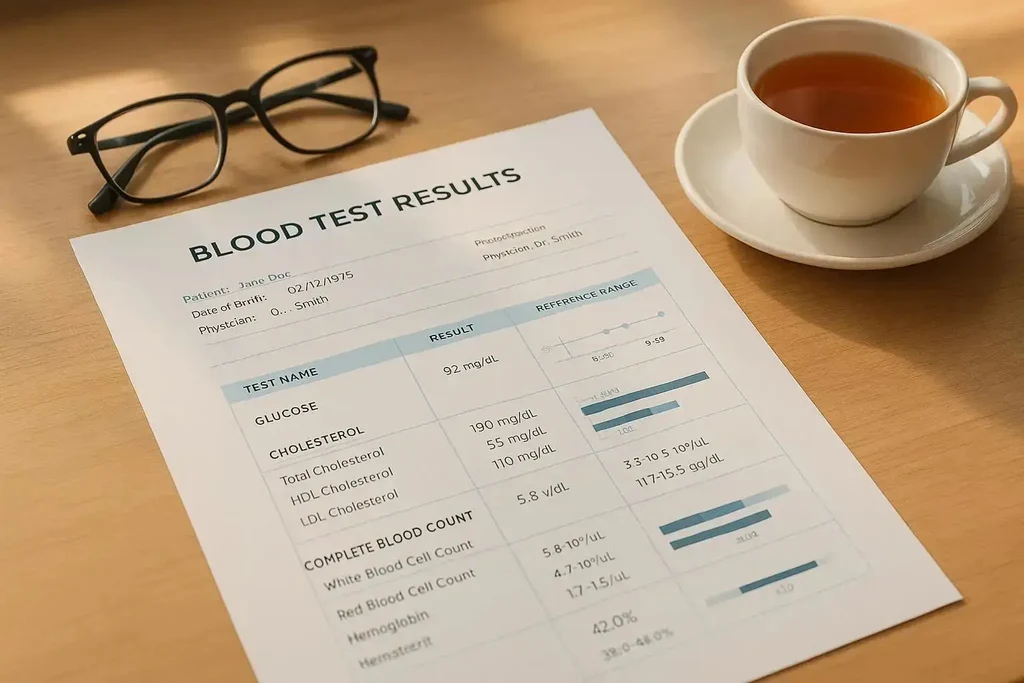
Ever stared at a blood report full of abbreviations and arrows and felt completely lost? You’re not alone. Most people leave the lab with a printout and no real idea what it means. Learning how to read blood test results doesn’t require a medical degree — just knowing what a handful of key markers actually indicate.
This isn’t a substitute for your doctor’s advice, but it’ll help you ask better questions during your next appointment.
Complete Blood Count (CBC) Basics
The CBC is usually the first section on any report. It measures red blood cells, white blood cells, and platelets.
Quick answer: Understanding how to read blood test results starts with the CBC — low hemoglobin often points to anemia, while high white blood cell counts can indicate infection or inflammation.
Hemoglobin and Iron Markers
Low hemoglobin is incredibly common, especially among Indian women. If your report shows hemoglobin below 12 g/dL, that’s typically flagged as low and worth discussing with your doctor, particularly around diet and iron intake.
Blood Sugar (Fasting and HbA1c)
- Fasting glucose under 100 mg/dL is generally considered normal
- 100-125 mg/dL usually indicates prediabetes
- HbA1c reflects your average blood sugar over three months, not just the day of the test
Knowing how to read blood test results for sugar levels matters more than ever, given how common diabetes has become across urban India.
Cholesterol and Lipid Profile
Total cholesterol alone doesn’t tell the full story. The ratio between LDL (bad cholesterol) and HDL (good cholesterol) matters just as much. A high LDL with low HDL is more concerning than a high total number with balanced ratios.
Quick answer: When reading a lipid profile, focus less on the total cholesterol number and more on the LDL-to-HDL ratio, since that ratio better predicts heart disease risk.
Liver Function Tests (LFT)
Markers like SGPT and SGOT indicate liver health. Mildly elevated numbers aren’t automatically alarming — they can spike from a heavy meal the night before or certain medications — but consistently high readings need follow-up.
Kidney Function (Creatinine and Urea)
These numbers reflect how well your kidneys are filtering waste. I’ve noticed a lot of people ignore slightly elevated creatinine because they “feel fine” — but kidney issues are notoriously silent until they’re advanced.
Thyroid Panel (TSH, T3, T4)
Thyroid issues are underdiagnosed, especially in women. A high TSH usually means an underactive thyroid; a low TSH often points the other way. This single test explains a surprising number of “mystery” fatigue and weight cases.
When Numbers Are Slightly Off — Don’t Panic
Not every arrow on your report means disease. Labs have reference ranges that vary slightly between facilities, and one-off abnormal readings are often nothing. Repeat testing and trends over time matter more than a single number.
[link to related guide on annual full body checkups here]
FAQs
Q: Do I need to fast before every blood test? Only for specific tests like fasting glucose and lipid profile — your lab will specify.
Q: Why do reference ranges differ between labs? Different equipment and calibration methods cause slight variations, which is normal.
Q: Is a single abnormal result something to worry about? Usually not — trends over multiple tests matter more than one isolated reading.
Q: How often should I get blood tests done? Annually for most healthy adults, more often if you have existing conditions.
Q: Can I read my report without a doctor? You can understand the basics, but always confirm interpretation with a professional.
Conclusion
Knowing how to read blood test results turns a confusing piece of paper into useful information about your own body. It won’t replace your doctor’s expertise, but it will make your next consultation far more productive. Next time you get your labs done, try reading them yourself first — then bring your questions to the appointment.